
AI Receptionist for Pet Clinics: Enhance Efficiency & Care
By CCAI Team
AI receptionist for pet clinics
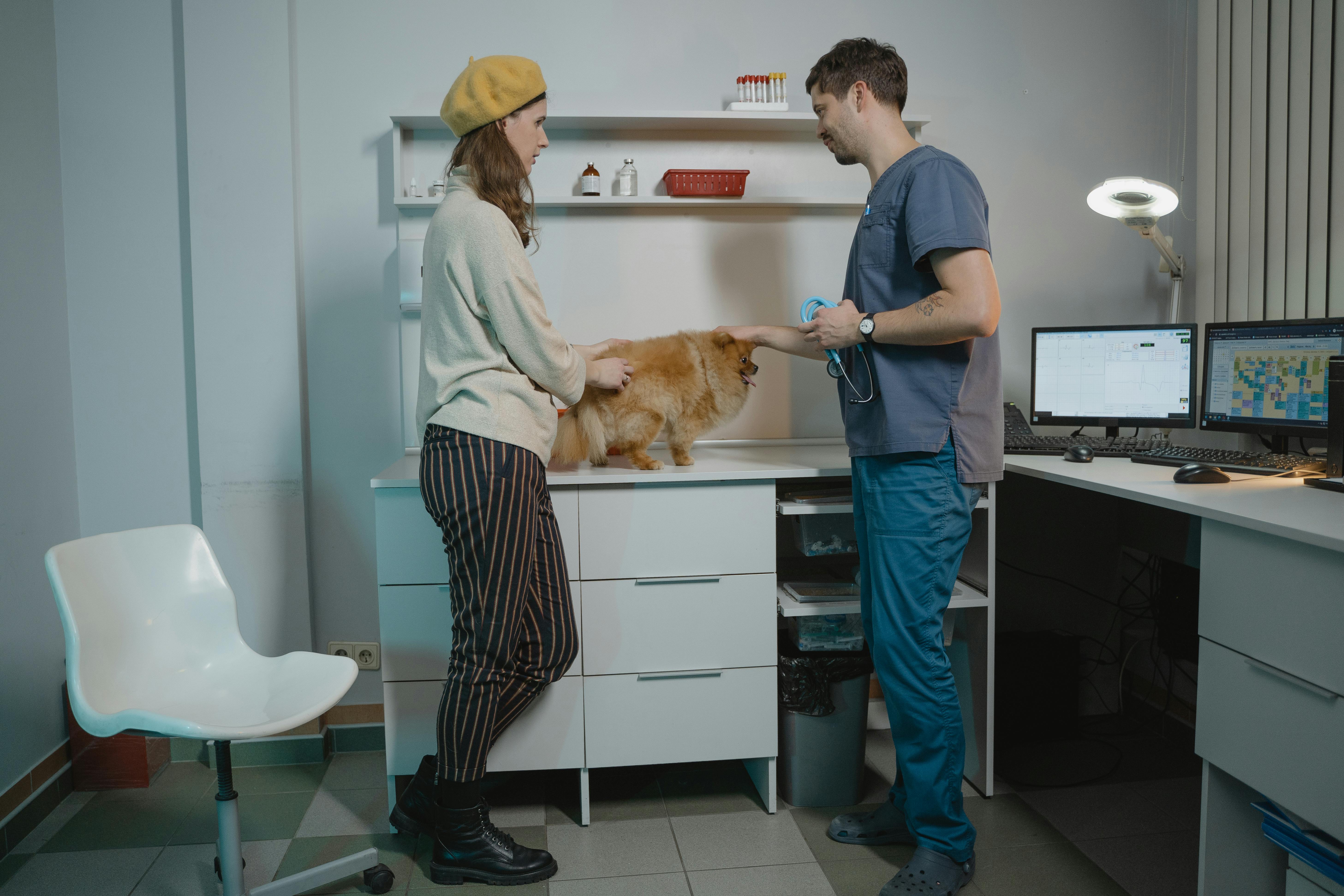
Picture this: It is 9:00 AM on a Tuesday. The waiting room of your veterinary clinic is bustling with nervous dogs and anxious cats. A client is standing at the front desk asking detailed questions about post-operative care, a technician needs a prescription authorization, and the phone simply will not stop ringing. Your front desk staff is doing their absolute best, but the sheer volume of tasks is overwhelming.
This scenario is far too common in veterinary medicine today. However, forward-thinking practices are discovering a powerful solution to this chaos: an AI receptionist for pet clinics.
By leveraging advanced artificial intelligence, veterinary hospitals are transforming their daily operations, freeing up staff to focus on in-person patient care while ensuring no phone call or appointment request ever goes unanswered. If you are exploring the future of AI clinic management, here is everything you need to know about integrating an automated receptionist into your veterinary practice.
The Front Desk Dilemma: Chaos and Burnout
Before diving into the technology, it is important to understand the root of the problem. Managing high call volume in animal hospitals is one of the most significant challenges practice owners face. Routine inquiries—such as asking for directions, checking business hours, or requesting basic appointment slots—clog up phone lines, leaving staff with less time to handle complex client needs or emergency situations.
This relentless pace takes a toll. Practice managers are constantly searching for solutions on how to reduce veterinary front desk burnout. When receptionists are overworked, client service suffers, mistakes happen, and employee turnover skyrockets. Hiring more staff is one option, but finding, training, and retaining reliable administrative personnel is increasingly difficult and expensive.
This is where a virtual pet assistant steps in to completely redefine the veterinary front desk.
What is an AI Receptionist for Pet Clinics?
An AI receptionist for pet clinics is an intelligent software system designed to handle incoming phone calls, web chats, and SMS messages using advanced artificial intelligence. Much like an AI voice agent in healthcare streamlines human medical facilities, these specialized veterinary bots can converse naturally with pet owners, understand their requests, and execute administrative tasks.
Thanks to natural language processing for clinic calls, these AI systems do not sound like the clunky, robotic phone trees of the past. They can detect nuances in a caller’s voice, understand complex sentences, and respond in a conversational, empathetic tone.
When looking at virtual vs human veterinary receptionists, the goal is not replacement, but collaboration. Human receptionists possess irreplaceable empathy and physical presence, which are essential for comforting worried pet owners and handling in-clinic logistics. The AI handles the high-volume, repetitive tasks, acting as a tireless digital shield that filters the noise so your human staff can focus on the animals in front of them.
Core Features of an Automated Veterinary Receptionist
Modern AI receptionists come packed with features designed specifically for the workflows of busy animal hospitals. Here is a look at what they can do:
1. Intelligent Scheduling and Booking
At the heart of any successful practice is a well-managed calendar. By utilizing modern pet appointment software, an AI receptionist can access your clinic’s live availability and book appointments in real-time. Callers do not have to wait on hold for ten minutes just to schedule an annual wellness exam. The automated veterinary appointment scheduling software seamlessly matches the pet’s needs with the correct veterinarian and appointment type.
2. Round-the-Clock Availability
Pets do not only get sick between 8:00 AM and 5:00 PM. Having a 24/7 virtual assistant for pet owners means your clinic is always "open" to take messages, answer FAQs, and schedule future visits. If a client remembers their dog needs a rabies booster at 11:00 PM on a Sunday, they can call or text the clinic, interact with the AI, and have the appointment booked before Monday morning.
3. Smart Triage and Emergency Routing
One of the most critical features of this technology is emergency triage automation for vet clinics. Using intelligent algorithms, the AI can detect keywords indicating a medical emergency (e.g., "hit by car," "breathing heavy," "ate chocolate"). The system immediately interrupts the standard booking flow and routes the call directly to an on-call veterinarian, a priority line, or an emergency referral center, ensuring critical situations are handled with zero delay.
4. High-Level Data Security
While the specific legalities of health privacy vary between human and animal medicine, pet owners expect their personal and financial information to be heavily protected. Top-tier AI systems offer HIPAA compliant pet health communication standards. This ensures that client data, payment information, and patient medical histories are encrypted and handled with the highest level of security.
The ROI: Why Make the Switch?
Clinic owners naturally want to know: what are the benefits of veterinary voice bots when it comes to the bottom line? The return on investment for an AI receptionist for pet clinics manifests in several highly impactful ways.
Financial Savings and Efficiency
When you compare the cost of virtual vet assistants vs full-time staff, the financial advantages are undeniable. Hiring a human receptionist involves hourly wages, health benefits, paid time off, and training costs. In contrast, an AI receptionist operates on a predictable monthly software subscription. It never calls in sick, never takes a vacation, and can handle multiple phone calls simultaneously without breaking a sweat.
Maximizing Appointment Revenue
A missed call is often a missed appointment—and missed appointments mean lost revenue. AI solves this by answering every single call on the first ring. Furthermore, these systems excel at preventing missed appointments with automated reminders. By sending personalized SMS or voice reminders leading up to the visit, AI drastically reduces no-show rates, keeping your schedule full and profitable.
Promoting Intelligent Pet Care
Automation allows your clinic to be more proactive. A virtual assistant can automatically follow up with clients a few days after a procedure to ask how the pet is recovering. If the client reports a problem, the AI can flag the response for a veterinary technician. This level of continuous, intelligent pet care builds incredible client loyalty and ensures better health outcomes for the animals.
Seamless Workflow: Integrating AI with Your Current Tech
A common fear among practice managers is that introducing new technology will disrupt their established workflow. However, the true power of an AI receptionist lies in its ability to operate within the ecosystem you already use.
Integrating AI with veterinary practice management systems (PIMS) is a crucial step in modernizing your clinic. Whether you use Cornerstone, Avimark, ezyVet, or Neo, today's AI voice agents are designed with deep API connections.
This PIMS integration for automated booking means that when the AI schedules an appointment, it instantly appears on your clinic’s master calendar. The system can pull client records to verify patient details, check vaccination statuses, and attach call transcripts or summaries directly into the patient’s digital file. There is no double data entry required from your staff; the AI does the heavy lifting seamlessly in the background.
Scaling Small Animal Practice with Automation
For independent clinic owners or small animal practices looking to grow, scalability is often bottlenecked by administrative capacity. You may have the veterinary talent to see more patients, but if your front desk cannot handle the influx of new client phone calls, growth stalls.
Scaling small animal practice with automation removes this bottleneck. As your marketing efforts bring in more leads, the AI receptionist effortlessly absorbs the increased call volume. You can expand your client base, offer new services, and grow your revenue without immediately needing to expand your physical front desk team or increase your clinic's square footage to accommodate more administrative desks.
Actionable Tips for Making the Transition
If you are ready to modernize your clinic, transitioning to an automated veterinary front desk requires a thoughtful approach. Here is how to implement this technology smoothly:
Evaluate Your Call Data
Before choosing a software provider, analyze your current call volume. Identify the most common reasons people call your clinic (e.g., booking exams, checking prices, asking for hours). This will help you program the AI effectively.
Choose the Right Partner
Look for a vendor that specializes in veterinary medicine, not just general business AI. They should offer robust pet appointment software features and proven PIMS integrations.
Train Your Staff
Communicate clearly with your team that the AI is there to help them, not replace them. Train your technicians and receptionists on how to read the AI's call summaries and how to step in when the AI transfers a complex call to a human.
Educate Your Clients
Introduce the new virtual assistant to your clients through an email newsletter or social media post. Give the AI a friendly, pet-themed name. Explain that this new helper will allow them to book appointments 24/7 without waiting on hold.
Start with a Phased Rollout
You do not have to automate everything on day one. Start by letting the AI handle after-hours calls or overflow calls when your human staff is busy on the other line. Once you and your clients are comfortable, expand its responsibilities.
Conclusion: The Future of Veterinary Reception
The veterinary industry is evolving rapidly, and the demands placed on clinic staff have never been higher. Relying solely on human receptionists to field hundreds of routine calls a day is no longer a sustainable model for a growing, modern practice.
By embracing an AI receptionist for pet clinics, you are doing much more than just upgrading your phone system. You are actively solving the crisis of staff burnout, providing pet owners with convenient, round-the-clock service, and ensuring your medical professionals can focus entirely on what they do best: healing animals. As AI technology continues to advance, the clinics that adopt these intelligent, automated solutions today will undoubtedly lead the way in operational efficiency and superior patient care tomorrow.
Turn this insight into real calls and conversions
Connect Call AI gives you pre-built AI voice agents that are ready to launch for call answering, booking, and lead conversion without setup delays or model training. And if your process is unique, we build a custom agent for your exact call flow and handle the full technical setup end-to-end.
Talk to our team
Contact Us
Tell us your goals and we will suggest the right AI call flow for your business.
Start consultation ->
Estimate cost
View Pricing
Calculate your monthly AI calling cost with pay-as-you-go pricing and request a custom quote for your call volume.
Open estimator ->
Start instantly
Try Demo
Visit our home page and see how our AI voice experience works in real-world flows.
Try live demo ->
Frequently asked questions
An AI receptionist for pet clinics is an automated voice, chat, or SMS system that handles common client requests, appointment scheduling, call routing, and basic clinic communication for veterinary practices.
Related blogs
AI Dental Receptionist: Transforming Front Desk Efficiency
Learn how an AI dental receptionist helps dental practices answer calls, automate scheduling, reduce cancellations, verify insurance, and improve patient experience.

Phone Call Answering Service
Learn how phone call answering services work, compare live, AI, and hybrid options, and discover how 24/7 call answering can help your business capture more leads.

Boost Customer Service with AI Receptionists for Small Businesses
Learn how AI receptionists help small businesses improve customer service with 24/7 availability, automated call handling, CRM integration, cost savings, and scalable support.

Discover the innovative features of sophiie.ai, your ultimate AI productivity assistant. Secure, versatile, and cost-effective, redefine how you work today.
Explore Sophiie.ai as an AI receptionist and office manager for service businesses, and see how AI phone answering, scheduling, CRM workflows, and custom call automation improve daily operations